Puppy Growth Calculator | Estimate Your Puppy’s Adult Weight
Puppy Growth Calculator
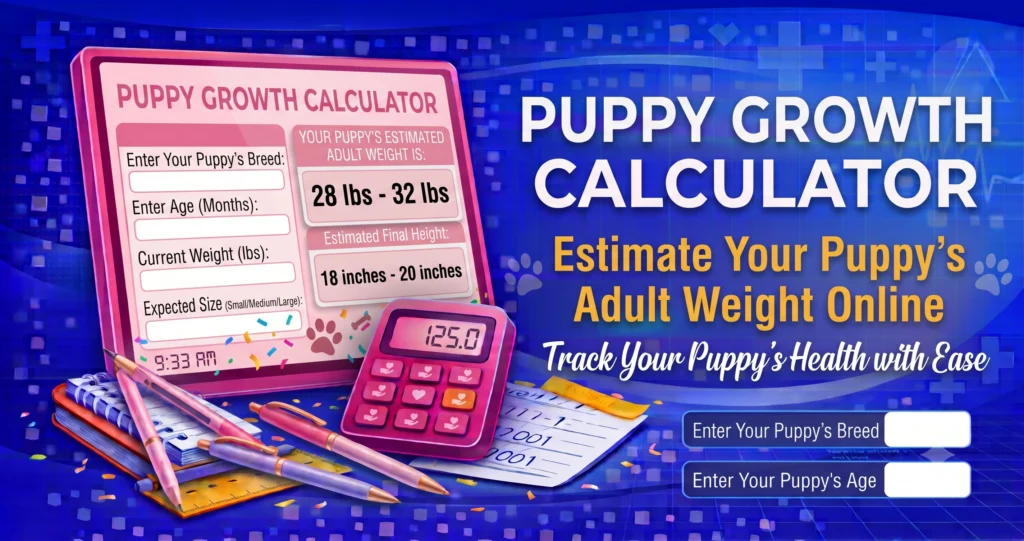
A Puppy Growth Calculator helps estimate your puppy’s expected adult weight based on its current age, weight, and breed size. Whether you’ve recently adopted a puppy or are monitoring healthy development, this calculator provides a quick estimate of how large your dog may become.
Our free calculator is easy to use, works on all devices, and provides instant results
What Is a Puppy Growth Calculator?
A puppy growth calculator estimates your puppy’s mature weight using common veterinary growth patterns. Puppies grow at different rates depending on their breed, age, genetics, nutrition, and overall health.
Small breeds typically reach adult size much earlier than large or giant breeds, so breed selection plays an important role in the estimate.
How Does Calculator Work?
Simply enter:
- Current puppy age (weeks)
- Current weight
- Breed size
The calculator estimates:
- Adult weight
- Growth stage
- Estimated remaining growth
- Approximate maturity age
The estimate is intended as a planning guide and should not replace advice from your veterinarian.
Puppy Growth Chart Calculator
A puppy growth chart calculator allows owners to monitor healthy growth over time.
General puppy growth timeline:
| Breed Size | Adult Age |
|---|---|
| Toy | 8–10 months |
| Small | 10–12 months |
| Medium | 12–15 months |
| Large | 15–18 months |
| Giant | 18–24 months |
Tracking your puppy’s growth helps ensure healthy development.
Puppy Growth Calculator by Breed
A puppy growth calculator by breed gives a better estimate because different breeds mature differently.
Examples include:
| Breed Size | Examples |
|---|---|
| Toy | Chihuahua, Yorkie |
| Small | Pug, Beagle |
| Medium | Border Collie, Cocker Spaniel |
| Large | Labrador Retriever, Golden Retriever |
| Giant | Great Dane, Mastiff |
Breed-specific estimates are generally more accurate than using weight alone.
German Shepherd Puppy Growth Calculator
Many pet owners search for a German Shepherd puppy growth calculator because German Shepherds have a unique growth pattern.
Typical adult weight:
| Gender | Adult Weight |
|---|---|
| Male | 65–90 lbs (29–41 kg) |
| Female | 50–70 lbs (23–32 kg) |
German Shepherds continue growing until approximately 18–24 months.
Puppy Growth Stages
| Age | Growth Stage |
|---|---|
| 0–8 Weeks | Nursing |
| 2–4 Months | Rapid Growth |
| 4–6 Months | Juvenile |
| 6–12 Months | Adolescent |
| 12–24 Months | Adult Development |
Factors That Affect Puppy Growth
Several factors influence how quickly a puppy grows:
- Breed
- Genetics
- Diet
- Exercise
- Health conditions
- Neutering/spaying timing
- Veterinary care
No calculator can perfectly predict adult weight because every puppy develops differently.
Why Use Our Puppy Growth Calculator?
Our calculator offers:
- Instant estimates
- Mobile-friendly design
- Beginner-friendly interface
- Breed-size support
- Weight in pounds or kilograms
- Free unlimited use
Tips for Healthy Puppy Growth
- Feed a balanced puppy diet.
- Visit your veterinarian regularly.
- Avoid overfeeding.
- Exercise appropriately for your puppy’s age.
- Monitor weight monthly.
Healthy growth is more important than rapid growth.
Proper nutrition plays an important role in your puppy’s growth. Try our Calorie Calculator to estimate daily calorie requirements for maintaining a healthy lifestyle.
Frequently Asked Questions
How accurate is a puppy growth calculator?
It provides an estimate based on typical growth patterns. Actual adult size may vary because of genetics, nutrition, and health.
Can mixed-breed puppies use this calculator?
Yes. Choose the breed size that most closely matches your puppy.
Does breed matter?
Yes. Breed is one of the biggest factors affecting adult weight and growth rate.
Can I use this for large breeds?
Yes. The calculator includes options for toy, small, medium, large, and giant breeds.
A Puppy Growth Calculator is a useful tool for estimating your puppy’s future size. Whether you’re using a puppy growth chart calculator, puppy growth calculator by breed, checking a German Shepherd puppy growth calculator, or comparing results from other puppy growth calculators, remember that the estimate is only a guide. Regular veterinary checkups remain the best way to monitor your puppy’s health and development.
For trusted information about puppy growth stages, nutrition, and pet health care, visit the American Kennel Club (AKC) website.